


As of 31 March 2026, the balance sheet total of the Bechtle Group was €4,611.2 million, slightly above the figure of €4,574.7 million as of 31 December 2025.
On the asset side, non-current assets increased by 3.9 per cent to €1,957.9 million. Goodwill in particular increased by €31.5 million as a result of acquisitions. Non-current trade receivables also increased, by €34.8 million. The capitalisation ratio increased to 42.5 per cent and was thus higher than the figure of 41.2 per cent as of 31 December 2025.
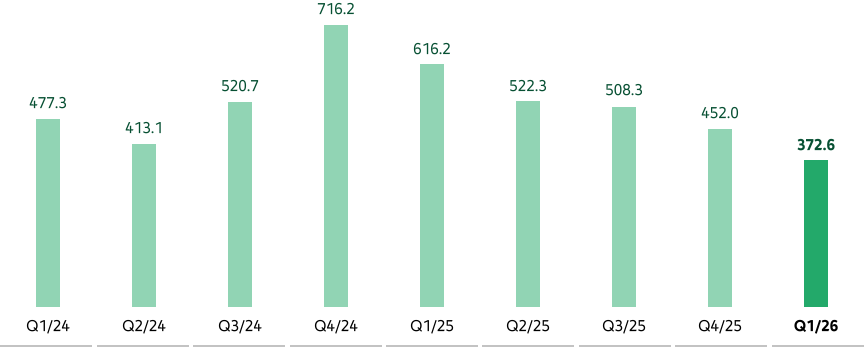
Current assets, on the other hand, fell by €36.4 million to €2,653.3 million as of the reporting date. Inventories increased by €178.6 million or 46.8 per cent and amounted to €560.2 million as of 31 March 2026. This increase reflected higher project volumes as well as contracts under which customers store goods at Bechtle and only call them up over time. In view of the price increases for memory chips, this is an arrangement that lets us put our warehouse capacity to targeted use. Trade receivables, by contrast, fell sharply by €182.6 million or 13.5 per cent. This positive development is also reflected in the average days sales outstanding (DSO) of our receivables. DSO continued to fall, reaching 38.1 days (previous year: 39.4). Cash and cash equivalents, including time deposits and securities, totalled €372.6 million at the end of the quarter.
Despite the increase in inventories described above, working capital increased only slightly to €530.7 million as of 31 March 2026, due to the offsetting effects of current trade receivables (31 December 2025: €500.5 million).
On the liabilities side, non-current liabilities remained almost stable and totalled €798.4 million on the reporting date.
Current liabilities fell slightly by €19.1 million to €1,711.4 million as of 31 March 2026. Current trade payables decreased by €19.3 million. Other liabilities increased by €21.3 million, or 5.5 per cent. This reflected higher acquisition-related liabilities and higher contributions for future advertising activities, offset partly by a reduction in personnel-related liabilities.
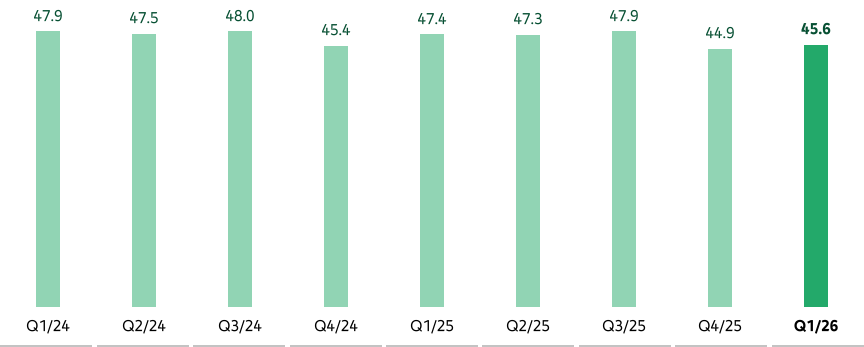
Equity increased by €49.0 million to €2,101.3 million. Accordingly, our equity ratio also improved, increasing from 44.9 per cent as of 31 December 2025 to 45.6 per cent. The annualised return on equity was 8.5 per cent, compared to 9.2 per cent in the same period of the previous year.
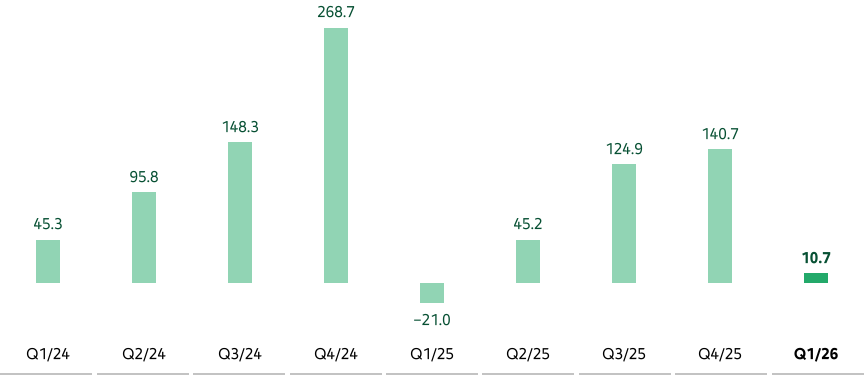
Despite strong growth in business volume, operating cash flow in the period from January to March 2026 was €10.7 million, compared to −€21.0 million in the same period of the previous year.
The following factors in particular were decisive in this respect:
Stronger growth and the outlook for memory chip price increases drove a substantially larger build-up in inventories than in the previous year, producing a cash outflow of €180.3 million (previous year: outflow of €34.5 million).
At the same time, we were able to significantly reduce trade receivables, which led to a cash inflow of €159.0 million. This was even higher than the previous year's cash inflow (€109.2 million).
Most importantly, the cash outflow from reducing trade payables was much lower at €7.3 million, compared with €161.7 million in the previous year.
Cash flow from investing activities showed a cash inflow of €17.2 million, compared to a cash outflow (−€7.6 million) in the previous year. Payments for acquisitions amounted to €27.8 million (previous year: €0.5 million). In addition, cash paid for investments in intangible assets and property, plant and equipment increased slightly from €28.8 million to €29.8 million in the reporting period. Inflows from the sale of time deposits and securities totalled €69.7 million compared to a lower balance of incoming and outgoing payments of €12.4 million in the previous year.
Cash flow from financing activities totalled −€41.2 million, compared to −€58.2 million in the same period of the previous year. In the previous year, higher cash paid for the repayment of financial liabilities had an impact in this respect.
At −€44.5 million, free cash flow from January to March 2026 was broadly in line with the previous year (−€45.4 million). Despite the higher operating cash flow, this was driven primarily by higher payments for acquisitions.